
_edited.png)
How to Choose the Right Blender Fabric for Your Quilt
- aribbonrunthruit
- Feb 22
- 3 min read
When you’re planning a quilt, it’s easy to focus on the main prints — especially the florals or statement fabrics you fell in love with first. But more often than not, it’s the blender fabrics that quietly make the whole quilt work.
Blenders don’t usually steal the spotlight. Instead, they help tie colors together, soften busy layouts, and give your eye a place to rest. Choosing the right blender quilting fabric can be the difference between a quilt that feels chaotic and one that feels balanced and cohesive.
What Is a Blender Fabric?
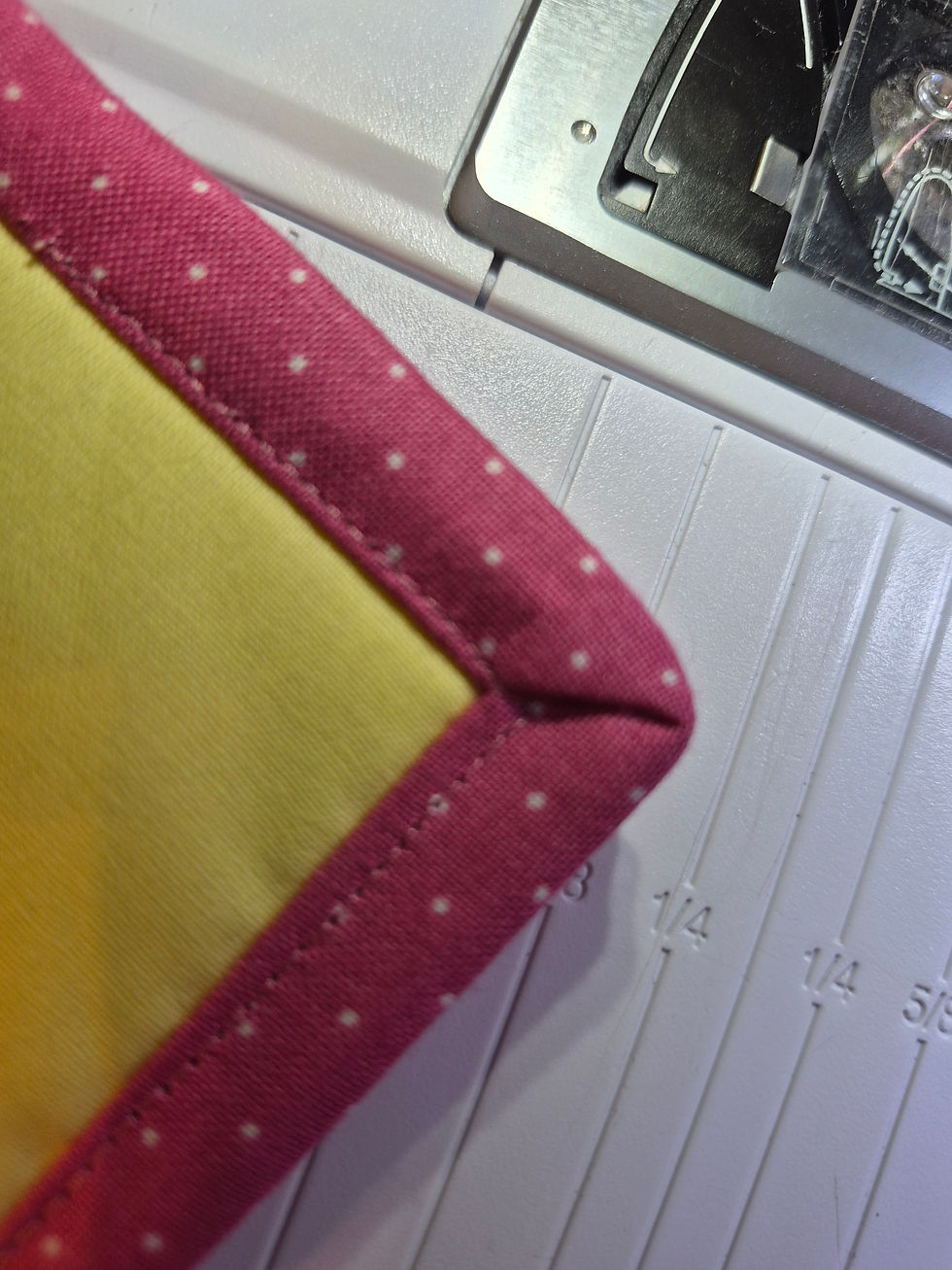
A blender fabric is usually a small-scale print or tone-on-tone design that coordinates with your main fabrics without competing with them. It might be a subtle texture, a tiny dot, a soft geometric, or a tonal pattern that reads almost like a solid from a distance.
Blenders are designed to “blend” — that’s where the name comes from. They fill in the gaps between bold prints and help everything work together without adding visual noise.
If you’ve ever looked at a quilt and thought, “Something just feels off,” it’s often because the supporting fabrics aren’t doing their job. That’s where a good blender makes all the difference.
Why Blender Fabrics Matter in Quilting
Most quilters do a great job choosing beautiful fabrics. The challenge usually isn’t picking pretty prints — it’s knowing when to let some of them breathe.
Every once in a while, I’ll see a quilt top that feels a little busy. Not because the fabrics aren’t beautiful, but because there are too many strong prints competing for attention. It’s like trying to fit all your favorite things into one space without giving your eye a place to rest.
That’s where blender fabrics come in.
Blenders give balance to bold florals and statement prints. They soften transitions between fabrics and help create visual flow across the quilt. Instead of adding more “noise,” they support what’s already there.
Used well, a blender can make your favorite print stand out even more — not less.
How to Pair Blenders with Florals
When I’m helping someone choose a blender, I don’t usually start with the most obvious color in the focal fabric. Instead, I look for one of the quieter colors — the ones that are there but not shouting for attention.
Maybe it’s a soft green in the leaves, a muted gold in the background, or a hint of blush tucked into a floral print. Pulling one of those more subtle colors into a blender fabric helps bring it forward and gives the whole quilt more depth.
Instead of competing with your focal print, the blender supports it. It creates connection across your quilt blocks and helps repeat color in a way that feels intentional, not overwhelming.
If your quilt top is starting to feel busy, try swapping one strong print for a coordinating blender in a softer tone. You might be surprised how much calmer and more cohesive the design feels.

Choosing the Right Scale and Contrast
One of the most common issues I see isn’t color — it’s scale.
Large-scale prints are beautiful, especially in florals. But when those bigger prints get cut into small piecing, the design can lose its impact and start to feel chaotic instead of cohesive.
If you’re working with smaller quilt blocks or detailed piecing, a blender fabric with a subtle, small-scale print is usually a better fit. It adds texture without overpowering the block. From a distance, it reads almost like a solid, but up close it still adds interest.
Large prints often shine best in borders, larger blocks, or focal areas where the design has room to breathe. Blenders help bridge the gap between those statement pieces and the rest of the quilt.
Paying attention to scale — not just color — can instantly make your quilt feel more balanced.
Where to Find Quality Blender Fabrics
Blender fabrics are one of the most useful tools in quilting, especially when you want to bring balance to bold prints or highlight subtle colors in your focal fabric.
At A Ribbon Run Thru It, I carry a selection of blender quilting cotton fabrics in classic tones and subtle textures. They’re sold in ¼-yard increments and cut continuously whenever possible, so you can order exactly what you need for your project.
You can browse current blender fabrics here: Blender Quilting Cotton Fabric


Comments